


SORA Technology Launches Satellite Data-, Drone-, and AI-Enabled Malaria Elimination Project in Zanzibar, Tanzania
SORA Technology Co., Ltd. (Headquarters: Nagoya, Japan; Founder & CEO: Yosuke Kaneko; hereafter “SORA Technology”), which provides advanced drone and AI solutions across public health, agriculture, and climate resilience, announced the official launch of a malaria elimination project in Zanzibar, United Republic of Tanzania. The project utilizes satellite data analytics, drones, artificial intelligence (AI), and a digital field management platform, called Zzapp Malaria Platform.
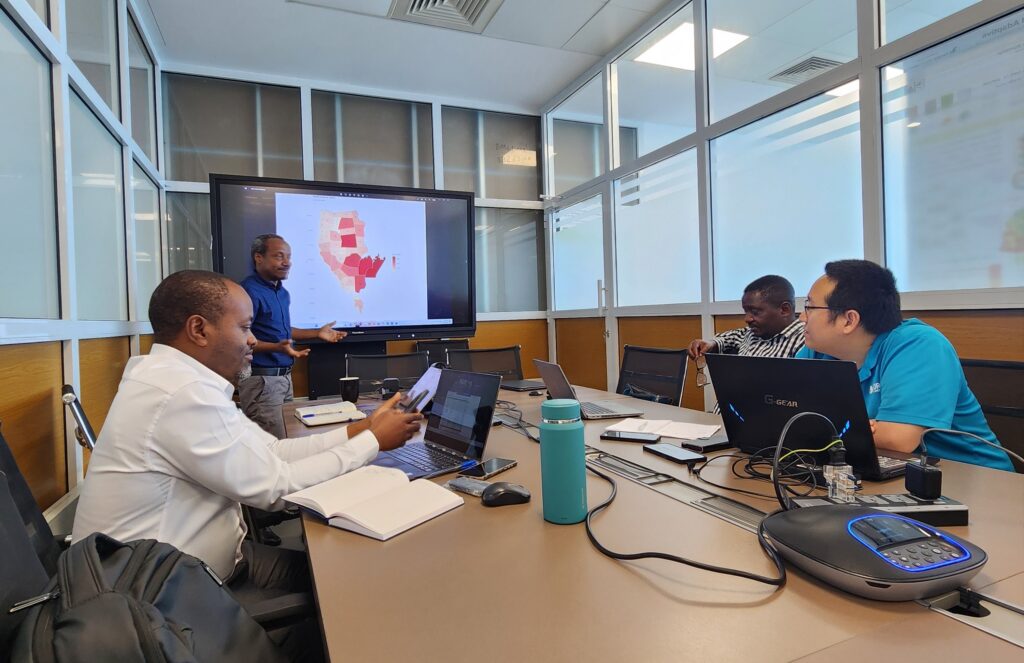
The project, “Smart Drone Technology for a Malaria-Free Future in Zanzibar,” was officially launched in Zanzibar, United Republic of Tanzania, on May 12, 2026. It is a project implemented through a collaboration among the World Health Organization (WHO), the Zanzibar Malaria Elimination Programme (ZAMEP), Ifakara Health Institute (IHI), and SORA Technology, with funding support from the Government of Japan.
The launch ceremony was attended by key stakeholders involved in malaria control, including Mr. Miraji Mngereza Mzee, Permanent Secretary of the Ministry of Health of Zanzibar; Mr. Ndoungou Salla BA, Head of the WHO Liaison Office in Zanzibar; and the research team from Ifakara Health Institute (IHI).
Zanzibar, a semi-autonomous region of the United Republic of Tanzania, has reduced its malaria incidence to just 0.04% through decades of sustained malaria control efforts. It is now recognized as one of the regions in Africa closest to achieving malaria elimination.
However, achieving malaria elimination requires more efficient Larval Source Management (LSM), which involves accurately identifying mosquito breeding sites—including temporary pools formed during the rainy season and wetlands that are difficult to access—and responding to them rapidly. Improving the efficiency of LSM has therefore become an urgent priority.
Traditionally, the process from identifying mosquito breeding sites to implementing control measures has taken up to three days. In addition, covering large target areas has required significant time and human resources. To address these challenges, SORA Technology is introducing an integrated technology solution that combines satellite data analytics, drones, AI, and the Zzapp Malaria Platform, a digital field management platform.
This solution provides end-to-end support—from the rapid and highly accurate identification of mosquito breeding sites to field operations, progress monitoring, and impact evaluation—thereby streamlining and enhancing LSM operations.
Using AI to analyze satellite and drone imagery, SORA Technology accurately identifies water bodies with a high risk of mosquito breeding. Based on these analytical results, drones carry out precision larvicide application, enabling the efficient management of mosquito breeding sites across large areas, including locations that are difficult to access. The project utilizes TSUBASA, SORA Technology’s proprietary drone developed specifically for larvicide application and deployed for field operations.
-1024x779.jpg)
SORA Technology’s proprietary drone “TSUBASA
Furthermore, the Zzapp Malaria Platform enables the integrated management of the entire LSM workflow—from mapping and surveying mosquito breeding sites to larvicide application, progress monitoring, and impact evaluation. Through this data-driven approach, the project aims to establish a sustainable LSM system.
The project will be implemented in Kati District and other selected areas of Zanzibar. Working in collaboration with researchers from Ifakara Health Institute (IHI), which has extensive experience in malaria research and control in the region, the project will conduct entomological monitoring to assess changes in mosquito populations. It will also evaluate the cost-effectiveness and operational efficiency of the proposed approach through comparisons with conventional surveillance and vector control methods.
To promote the local adoption and long-term operation of the technology, the project will place strong emphasis on the engagement of local youth, community health volunteers, and community leaders. Through community awareness activities and field-based monitoring, the project aims to establish a sustainable public health model that combines advanced technologies with local knowledge and community participation.
Through this project, SORA Technology will support Zanzibar’s efforts to establish more effective, efficient, and sustainable malaria vector control, while contributing to the generation of operational evidence for technology-enabled LSM in East Africa.
Reference
Release from WHO Africa Region:Link
Company Profile
Company Name: SORA Technology Co., Ltd.
Headquarters: 2-14-1 Nagono, Nishi-ku, Nagoya, Aichi, Japan
Representative: Yosuke Kaneko (Founder & CEO)
Established: 2020
Business: Development and provision of drone- and AI-powered technologies for infectious disease control, agricultural support, and climate adaptation.
Mission: SORA Technology is committed to the mission of “Transforming lives from the sky (SORA).” By leveraging advanced drone and AI technologies, the company aims to help build safe and prosperous societies anywhere in the world. Centered in Africa and other developing regions, SORA provides a wide range of services, from infectious disease surveillance and control to agricultural productivity enhancement and climate adaptation support.
LinkedIn: https://www.linkedin.com/company/sora-technology/
Facebook: https://www.facebook.com/sora.technology/
